AC Leak Water Damage in Center Grove: Condensate Line Fix
It usually starts with a brown ring on the ceiling under the upstairs hallway, or a damp patch of carpet near the furnace closet that you swear was dry last week. By the time most Center Grove homeowners call Center Grove Water Restoration, the air conditioner has been quietly dripping for days, sometimes weeks, and the drywall above the living room is sagging like a wet paper towel. AC condensate leaks are sneaky because the water is clean, the volume is small, and the source is hidden inside a closet or attic that nobody looks at between April and October. That slow drip is exactly what makes the damage worse than a burst pipe in many cases. Materials stay wet long enough for mold to take hold, insulation compresses, and the subfloor under the air handler can rot before anyone notices a smell.
We started Center Grove Water Restoration in 2018 because too many homeowners in central Indiana were getting handed inflated estimates by national chains that did not bother to find the actual source of the water. We are IICRC certified, BBB A+ rated, and we work AC leak losses almost every week from late spring through early fall. If we look at your situation and decide you do not need a full restoration crew, we will tell you directly and point you toward the right HVAC contractor. This guide walks you through what is actually happening behind that ceiling stain, what condensate line repair really involves, and what the cleanup should cost in Center Grove.
Why Your AC Is Leaking Water Into the House
Every central air system pulls humidity out of your indoor air and turns it into liquid water. A 3 ton unit running on a humid Center Grove July afternoon can produce 5 to 20 gallons of condensate per day, and all of it is supposed to travel from the drain pan under the evaporator coil, through a PVC condensate line, and out to a floor drain or the exterior of the home. When that path gets blocked, the water has to go somewhere, and gravity always wins. The most common culprit is algae and biofilm sludge clogging the line at a fitting or elbow. Dust pulled across the cold coil mixes with condensation and forms a slimy mat that hardens into a plug. Once the line backs up, the primary drain pan overflows. If the secondary pan is rusted through or the float switch was never installed, water pours directly onto whatever sits below the air handler, which in most Center Grove homes is a finished ceiling, a hardwood floor, or a stack of cardboard boxes in a closet.
Other causes we see regularly include a disconnected fitting where the condensate line meets the air handler, a cracked drain pan on units over 12 years old, an improperly sloped line that lets water pool and freeze near the exterior wall in shoulder seasons, and a frozen evaporator coil that thaws all at once and dumps gallons of water past the pan capacity. Heat pump systems in defrost mode can produce similar surges in winter. Whatever the cause, the fix involves two separate trades. An HVAC technician has to clear or replace the line and verify the float switch works. A restoration contractor has to dry the building materials, document the loss for insurance, and remove anything that cannot be salvaged.
The warning signs almost always show up before the ceiling stains do. A musty smell near a return vent, a gurgling sound from the air handler closet, water spots around the base of the unit, or an AC that suddenly stops cooling because a float switch finally tripped are all early indicators that the condensate path is compromised. Homeowners in Center Grove who run their systems hard from May through September should have the line flushed with a wet vac at the cleanout once a season and a cup of distilled vinegar poured through it monthly to keep algae growth in check. Units installed in attics are the highest risk, because any overflow has the entire ceiling assembly to soak through before anyone notices, and attic temperatures of 130 degrees accelerate microbial growth in the trapped moisture.
Cost, Insurance, and What to Do Right Now
A straightforward AC condensate leak in Center Grove with one affected ceiling and minor drywall removal typically runs between 1,800 and 4,500 dollars for the restoration portion, not counting the HVAC repair, which usually adds 150 to 600 dollars depending on whether the line gets cleared or replaced. Larger losses involving hardwood floors, multiple rooms, or attic insulation can climb to 8,000 dollars or more. Most homeowners policies cover sudden and accidental discharge from an HVAC system, which is exactly what a condensate overflow qualifies as. What insurance will not cover is long term seepage, so the sooner you document the loss and call a restoration contractor, the stronger your claim position. Center Grove Water Restoration bills insurance directly and provides the moisture logs, photos, and scope of work your adjuster needs to approve the file without back and forth.
If you are reading this with water actively dripping, shut the AC off at the thermostat right now. That stops new water from being produced. Place a bucket or towels under the drip, move furniture and rugs away from the wet zone, and pull back any carpet edges so air can reach the pad. Do not punch holes in the ceiling unless it is bulging dangerously, because controlled removal preserves more of the surrounding drywall. Take a few phone photos of the damage from multiple angles before you move anything, since adjusters appreciate seeing the loss in its original state. Then call us. The first 24 hours decide whether you are looking at a dry in place job or a full reconstruction, and Center Grove Water Restoration keeps crews on standby in Center Grove specifically for these summer AC overflow calls.
What Repair and Restoration Actually Look Like
When our team at Center Grove Water Restoration arrives in Center Grove, the first thing we do is locate the source with a thermal camera and a pinless moisture meter. AC leaks almost always show up downstream of the air handler, but the visible stain is rarely directly under the leak point. Water travels along joists, top plates, and ductwork before it finds a gap in the drywall. We map the wet area, mark the moisture content of every affected material, and take photos before anything gets touched. That documentation is what gets your claim paid without an argument. If you want a deeper look at how hidden moisture gets traced through framing, our breakdown of water damage behind walls and hidden leak detection covers the tools and the logic we use on every job.
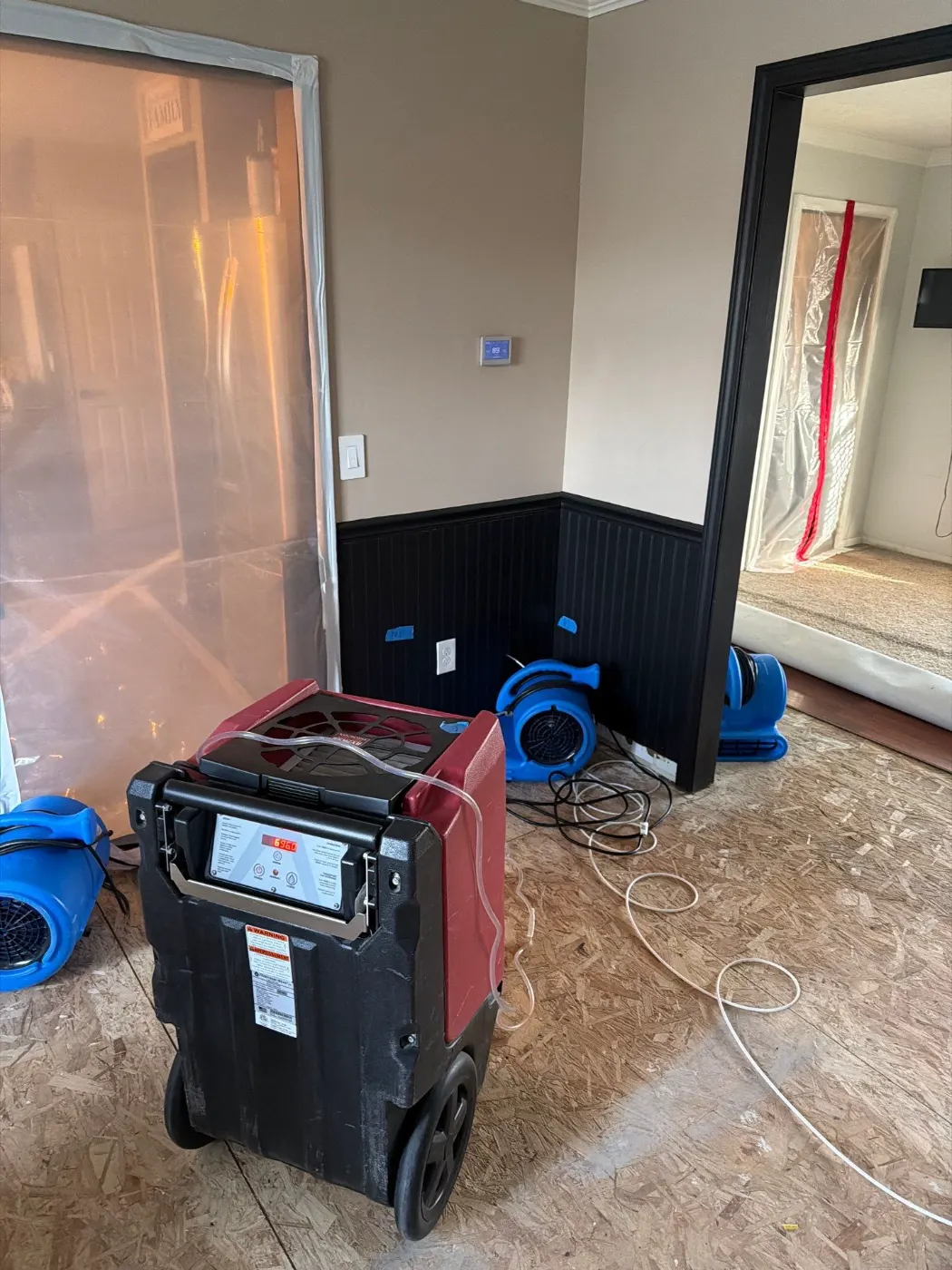
Once the source is confirmed stopped, we extract any standing water, remove saturated insulation, and set up air movers and dehumidifiers sized to the cubic footage of the affected space. A typical AC leak in a single ceiling cavity needs 3 to 5 days of structural drying, sometimes longer if the subfloor above is involved. Drywall that has been wet for more than 48 hours usually has to come out because Category 2 grey water from a dirty drain pan carries bacteria and supports mold growth. If you want the technical detail on why that line gets drawn, the grey water damage Category 2 cleanup guide explains the IICRC standards we follow. For broader context on the full process from extraction through reconstruction, our water damage restoration service page lays out every step.
Attic and ceiling jobs introduce a few extra wrinkles worth knowing about. Blown in cellulose insulation that gets soaked turns into a heavy, compacted mat that has to be bagged and hauled out by hand, and the same goes for fiberglass batts once they have absorbed Category 2 water. Recessed light cans, bath fans, and HVAC registers act as drip points, which is why the first visible damage often appears six or eight feet away from the air handler itself. We seal off the work zone with poly containment to keep insulation dust and any disturbed mold spores out of the rest of the house, and we run HEPA air scrubbers continuously until the affected area passes a post remediation verification. Reconstruction can usually start within a week of the initial loss if drying went smoothly and the homeowner has selected matching paint and texture.
Get the Leak Stopped and the Damage Documented
AC condensate leaks look small until you open the ceiling and find black mold on the back of the drywall. The water is clean when it leaves the coil, but it does not stay clean for long once it sits in building materials. Center Grove Water Restoration responds to AC leak calls across Center Grove the same day, and we will give you a straight answer about what your home actually needs. If the fix is a simple HVAC service call and a fan pointed at a damp spot, we will say so. If it is a full Category 2 restoration with claim documentation, we will handle it start to finish.
Frequently Asked Questions
How do I know if my AC condensate line is clogged?
Common signs in Center Grove homes include water around the indoor unit, a ceiling stain below an attic air handler, the AC shutting off unexpectedly due to a tripped float switch, or a musty smell near vents. A simple test is to pour a cup of water into the drain pan and see if it drains within 30 seconds.
Can I just dry the ceiling myself with a fan?
For a small surface stain that is already dry, yes. For actively wet drywall or insulation, household fans cannot pull moisture out of the cavity fast enough to beat mold growth. Center Grove Water Restoration uses commercial air movers and LGR dehumidifiers that move 10 to 20 times the air of a box fan.
Will homeowners insurance cover AC leak water damage in Center Grove?
Usually yes if the leak is sudden and accidental, and no if the adjuster determines it has been leaking for weeks or months. Service your AC annually, document the date you discovered the leak, and keep all repair invoices to support the claim.
How long does it take to dry water damage from an AC leak?
Most contained ceiling or wall losses dry in three to five days with proper equipment. Cases involving saturated insulation, subfloor, or hidden cavity moisture typically run five to ten days. We monitor daily and remove equipment only when moisture readings match unaffected areas.
Should I turn off my AC if I find a leak?
Yes. Shut the system off at the thermostat and the breaker until the line is cleared and the pan is empty. Running a leaking unit pumps more water into your ceiling or wall every cycle, which is the single biggest reason small leaks turn into large restoration jobs.
Have a restoration question?
Our IICRC certified Center Grove crew is ready to help. Free assessments, estimate based on what we can sees, no pressure.