Water Heater Leak in Center Grove: Emergency Cleanup Steps
A leaking water heater is one of those problems that goes from drip to disaster in a few hours. One day you notice a damp spot near the tank. The next morning your Center Grove basement or utility closet has an inch of warm water spreading toward drywall, baseboards, and stored boxes. If you are reading this with a wet shop vac in one hand and your phone in the other, you are in the right place.
At Center Grove Water Restoration, we have responded to hundreds of water heater failures across Central Indiana since 2018. Tanks rust out. Pressure relief valves fail. Supply lines burst. The cleanup playbook is the same regardless of which part gave up, but the speed of your response decides whether you spend $800 or $8,000. This guide walks you through emergency steps, realistic Center Grove cost ranges, what your insurance will and will not cover, and how IICRC certified drying actually works.
If we cannot help you, we will tell you directly. That promise has not changed since the company was founded.
What should you do in the first ten minutes of a water heater leak?
Shut the water off first. On most tanks there is a cold water inlet valve on top, usually a lever or a round handle. Turn it clockwise until it stops. If that valve is corroded or stuck, go to your main house shutoff, which in most Center Grove homes sits near the front foundation wall or in the utility room. Next, kill the power. For an electric unit, flip the dedicated breaker in your panel. For gas, rotate the dial on the side of the tank to the off position. Then start moving anything you care about out of the water. Cardboard boxes, photo albums, anything wooden, anything fabric. Water doubles in damage potential every hour it sits, and warm water from a hot tank actually accelerates microbial growth compared to cold supply line leaks.
How much does professional water heater leak cleanup cost in Center Grove?
The honest range for Center Grove homes is between 1,500 and 7,500 dollars for the restoration side, not counting the new heater. A contained leak in a concrete floor utility room with minimal materials affected often lands between 1,500 and 2,800 dollars. That covers extraction, three to four days of drying with air movers and a dehumidifier, antimicrobial application, and a final moisture verification. If the water reached finished space, carpet pad, hardwood, or traveled into wall cavities, you are looking at 3,500 to 7,500 dollars because we have to remove materials, dry the structure from inside the wall, and rebuild. For a deeper breakdown by category and square footage, our water damage restoration cost guide walks through line items the way an adjuster sees them.
Is a water heater leak considered clean water or is it contaminated?
Under IICRC S500 standards, a fresh leak from the tank itself starts as Category 1, meaning clean water. That sounds reassuring, but the clock matters. Once that water sits longer than 24 to 48 hours, or once it touches subfloor, insulation, or anything organic, it shifts to Category 2 (gray water). If your tank is in a basement that also has a floor drain backing up, or if the leak has been ongoing for days behind a wall, it can reach Category 3 territory fast. We test moisture content and bacterial load on arrival so we are not guessing. This matters for your insurance claim too, because the category drives the scope of work. Sediment that built up at the bottom of an older tank also introduces rust and mineral content into the discharge, which can stain grout, concrete, and light colored carpet within hours. If you notice a reddish brown tint to the water on your floor, mention that to the adjuster and to our technicians, because it changes how we pretreat surfaces before extraction.
Do I need to replace flooring and drywall, or can it be saved?
It depends on three factors: material, contact time, and category. Tile and sealed concrete almost always survive. Carpet face fiber can usually be saved if cleaned within 48 hours, but the pad underneath is almost always replaced because it acts like a sponge and traps contaminants. Engineered hardwood cups quickly and rarely recovers. Drywall that wicked water more than four inches up from the floor usually gets flood cut and replaced because the paper backing feeds mold. If the leak migrated into a finished basement, our basement flooding restoration team handles those larger scopes regularly across Center Grove.
Should I replace the water heater myself or wait?
If the tank failed catastrophically, replace it before restoration finishes so the plumber and our drying crew can coordinate. If it was a fitting or valve leak and the tank is under eight years old, a plumber can often repair the connection for 200 to 600 dollars. Either way, do not run the new unit until the floor underneath is dry and the pan is properly installed with a drain line. We have seen homeowners in Center Grove replace a heater on Saturday and call us Sunday because the same problem recurred from a saturated subfloor warping the new pan.
How can you prevent the next water heater leak?
Most tank failures in Center Grove happen between years 10 and 13, so know the install date on your unit and start budgeting for replacement at year nine. Flush the tank annually to clear sediment that corrodes the bottom. Check the anode rod every three years and replace it if more than six inches of the core wire is exposed, since that single 30 dollar part can extend tank life by five years. Install a simple battery powered water alarm at the base of the tank for under 20 dollars, or upgrade to a smart leak detector that shuts the water off automatically. For finished spaces above or near the heater, a drain pan plumbed to a floor drain is cheap insurance. Center Grove Water Restoration can recommend a licensed plumber if you do not already have one on call.
How long does drying actually take?
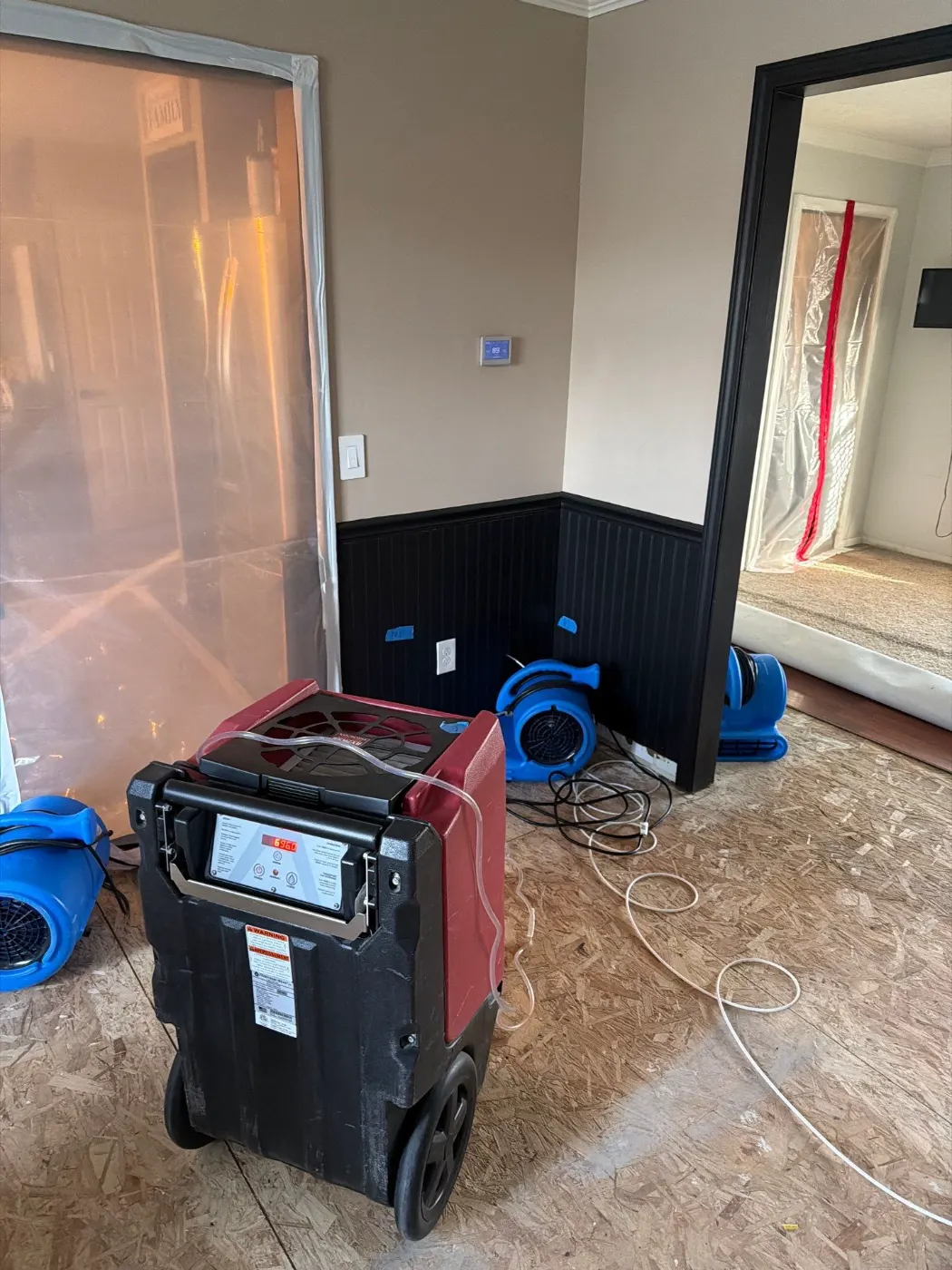
For a typical 40 to 50 gallon tank leak affecting 150 to 400 square feet, expect three to five days of active drying. Concrete dries slower than people think, and hardwood is the slowest of all, sometimes needing seven days plus specialty mat drying systems. We set air movers (one per 10 to 16 linear feet of wet wall) and at least one commercial dehumidifier sized to the affected cubic footage. Moisture readings get logged daily. You should not see anyone pulling equipment until the wood framing reads below 16 percent and the drywall returns to the dry standard for Center Grove's climate zone.
What if the leak went undetected for weeks?
Long term slow leaks are the ones we worry about most. You may smell something musty before you see water. By the time visible damage shows up, mold colonies have usually formed inside the wall cavity or under the subfloor. In that scenario we bring in containment, negative air machines, and remediate per IICRC S520 mold standards before any rebuild. Costs scale up, often 4,000 to 12,000 dollars, but skipping this step means the mold returns and your next buyer's inspector finds it. If you are dealing with standing water already, our water extraction service overview explains how we handle the removal phase before drying begins.
Will my homeowners insurance cover the damage?
Usually yes, with conditions. Sudden and accidental discharge from a water heater is a covered peril on most standard policies in Center Grove. What insurance will not cover is the heater itself if it failed from age or rust, and they may push back if the unit is over 12 years old and shows obvious neglect. They will cover the resulting water damage to floors, drywall, baseboards, and contents. Deductibles in Central Indiana typically run between 1,000 and 2,500 dollars. Document everything before you start cleanup. Photos of the tank, the water line on the wall, the serial plate, and every wet item. Our team at Center Grove Water Restoration can also help walk you through the claim language, since we work with adjusters daily and know what gets approved. Keep receipts for any emergency purchases like wet vacs, fans, or hotel stays if your home is uninhabitable, because additional living expense coverage often reimburses those costs but only with paper trails.
Stop the Damage Before It Doubles
A water heater leak does not pause while you research contractors. Every hour standing water sits, your repair bill grows and your mold risk climbs. Center Grove Water Restoration answers the phone 24 7, shows up with the right equipment, and gives you a straight answer on cost before we start. If your Center Grove home has water on the floor right now, call us and we will be on the way.
Frequently Asked Questions
How fast can Center Grove Water Restoration arrive after a water heater leak in Center Grove?
Our standard response window across Center Grove and Central Indiana is 60 to 90 minutes for emergency calls, often faster during business hours. We dispatch a truck while you are still on the phone with us.
Will my homeowners insurance cover a water heater leak?
Most policies cover sudden and accidental discharge, which includes a tank rupture or failed fitting. They typically do not cover the replacement tank itself or damage from long-term seepage. We help document the loss so your claim has the evidence it needs.
Do I need to replace flooring and drywall after the leak?
Not always. If we extract and dry quickly, hardwood, tile, and even some carpet can be saved. Swollen particleboard subfloor, soaked drywall over 24 hours old, and saturated carpet pad usually need replacement. We make that call based on moisture readings, not guesswork.
What is the difference between Category 1 and Category 2 water from a water heater?
Fresh water from the supply line is Category 1, which is clean. Water that has been sitting in the tank or has contacted contaminated surfaces becomes Category 2 within 24 to 48 hours. The category affects which materials can be dried in place versus removed.
Can I just use a shop vac and fans instead of hiring Center Grove Water Restoration?
For a very small spill caught immediately, yes. For anything that reached subfloor, wall cavities, or a finished space, household equipment will not pull moisture from inside materials. Hidden moisture is what causes mold and warped floors weeks later. If you are unsure, call us and we will tell you honestly whether you need professional drying.
Have a restoration question?
Our IICRC certified Center Grove crew is ready to help. Free assessments, estimate based on what we can sees, no pressure.